Minority groups have an option to seek legal redress when their right to access taxpayer-funded public services has been infringed upon as they remain protected under Malawi’s Constitution.
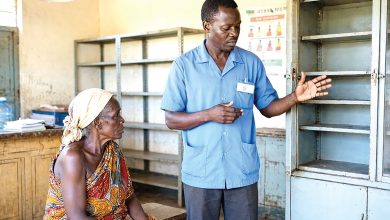
Legal minds and human rights advocates said this in separate interviews following alleged continued discrimination and stigma against members of the lesbian, gay, bisexual, transgender, queer and intersex (LGBTQI) community when accessing healthcare services.

Both local and international human rights organisations have documented discriminatory scenarios against the LGBTQI community and have made numerous propositions in reports submitted to international human rights bodies.
Malawi Law Society honorary secretary Gabriel Chembezi on Friday said Section 20 (1) (a) of Malawi’s Constitution obligates healthcare workers to respect sexual and reproductive health rights (SRHR) of everyone without discrimination and that Section 19 (1) of the Gender Equality
Act stipulates that everyone has the right to access SRHR services.
“Therefore, if members of the LGBTQI community face discrimination in accessing these services, they can pursue legal action under the Gender Equality Act. They also have the option to rely on their broader constitutional rights to challenge discrimination in other areas of healthcare,” said Chembezi.
Malawi’s Penal Code sections 153 and 156 criminalise unnatural offences.
Chembezi said it may be incumbent upon interested parties to petition Parliament to amend the law or pursue further legal challenges to determine if such criminalising laws align with constitutional rights.
He said: “This is both a legal and political matter, as it is up to Malawians, through their representatives in Parliament, to advocate for reforms if they believe certain behaviours should not be criminalised.”
Southern Africa Litigation Centre criminal justice lead Chikondi Chijozi in a written response on Thursday said the Constitution protects everyone without exception.
She said: “The protection of rights under our Constitution is without exception to any other grouping of people. The right to equality requires that every human being should have equal access to services and nobody should be discriminated against based on any other status.”
Chijozi, who is also Malawi Human Rights Commission chairperson, said the recent Constitutional Court ruling that maintained the outlawing of homosexuality in Malawi should not be a licence to discriminate against minority groups.
She was referring to a June 28 2024 ruling by the High Court of Malawi sitting as a Constitutional Court which dismissed a petition in which Dutch national Jan Willem and
Malawian Jana Gonani wanted the court to determine the constitutionality of sections 153, 154 and 156 of the Penal Code.
The sections prohibit unnatural offences and indecent practices between people of the same sex. The duo moved the courts to have the Sections removed, arguing that they are unconstitutional and are a contributing factor to the injustices the LGBTQI community is facing.
But in the verdict, judges Joseph Chigona, Vikochi Chima and Chimbizgani Kacheche stated that all the laws about the LGBTQI community were legally and procedurally instituted and that if the two wanted them changed, they ought to contact members of Parliament.
Centre for Human Rights Education Advice and Assistance executive director Victor Mhango in a separate interview on Thursday said it is wrong to deny the LGBTQI community access to basic public services.
Minister of Information and Digitilisation Moses Kunkuyu did not respond to our questions sent to him on Friday.
In its report to the Human Rights Council pertaining to realisation of the right of persons affected by violence and discrimination based on sexual orientation and gender identity, Nyasa Rainbow Alliance (NRA) stated that the LGBTQI community in Malawi continues to face a plethora of challenges in accessing services from public health institutions due to their sexual orientation.
NRA, in the report, stated that this is the situation despite Section 20 of Malawi’s Constitution guaranteeing all citizens the right to equality and non-discrimination.